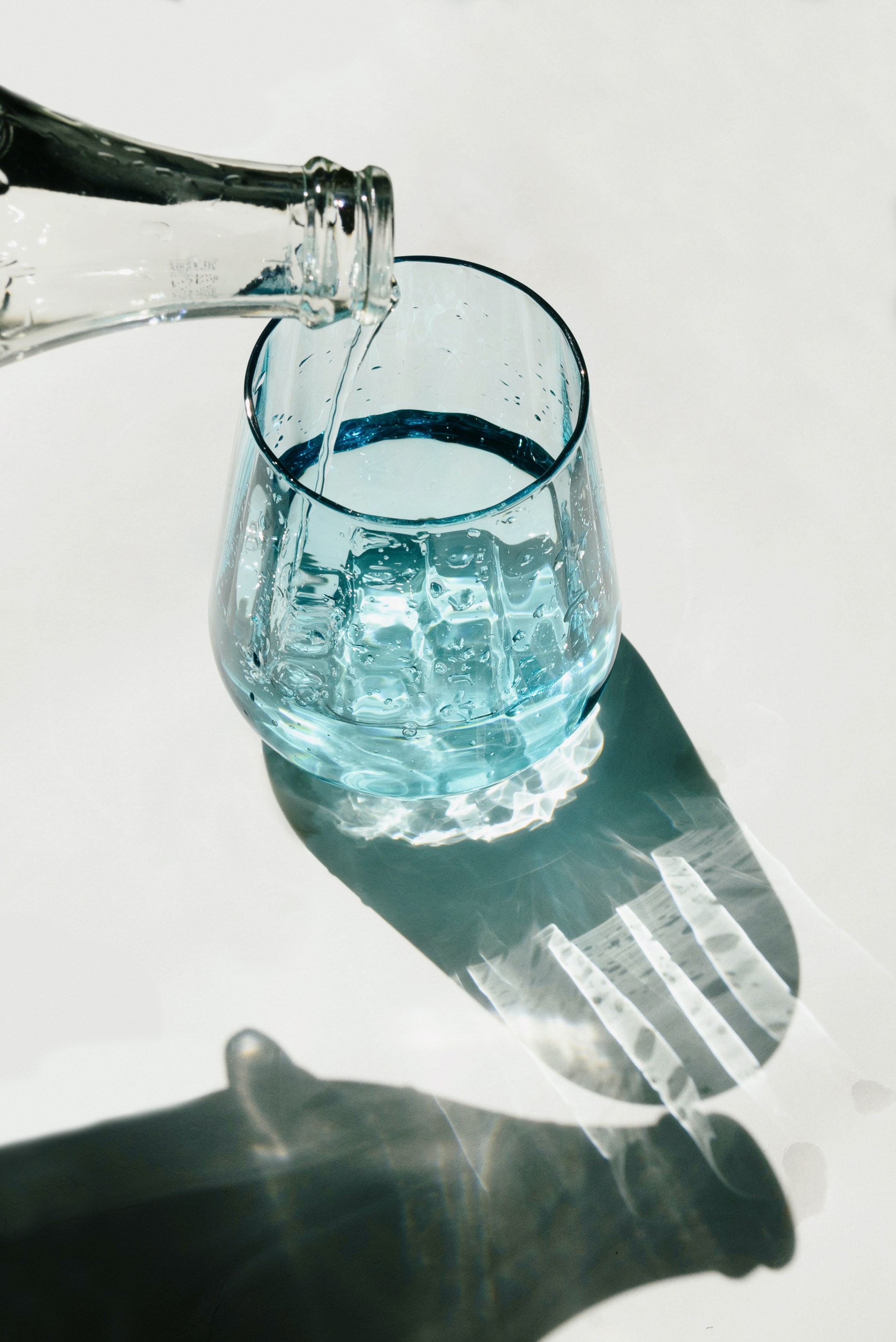
Wonders of Water

Did you know that your body is made up of about 60% of water? Water is an essential nutrient that is involved in every function in the body. It helps to transport nutrients and waste products in and out of the cells. We need it for proper digestion and absorption of food we consume. It protects your tisues, spinal cord and acts as lubricant for your joints. Our circulatory and excretory functions as well as utilisation of water-soluble vitamins depend on the optimal levels of precious H2O. Human beings can survive for almost eight weeks without food, but only days without water. Unfortunately, most of us neglect our water intake, which can subsequently lead to various symptoms such as fatigue, impaired cognitive functions and motor skills.

5 Wonders of Water


1. Improves Brain Health & Relieves Fatigue

Are you surprised? The human brain is 80% water.  It is estimated that three quarters of our brain is water. Even mild dehydration can have can lead to lack of mental clarity, headaches or sleep issues. Studies have shown that a body water loss of 1-2%, can impair your mood, memory and brain performance. And the opposite is true; water is the medium for most chemical reactions in the body, especially those metabolic reactions involved in energy production, therefore staying hydrated increases energy levels, improves movement and physical performance.

2. Promotes Weight Loss

The same symptoms of dehydration- headache, fatigue, light-headedness and difficulty concentrating can resemble symptoms of hunger. Our internal ‘I’m hungry’ and ‘I’m thirsty’ can be subtler than you think. Research found that inadequate hydration among adults was associated with higher body mass index (BMI). It could be explained by the simple fact that the more we weigh, the more water we need, therefore we might confuse thirst for hunger or drink many caffeinated drinks, which have diuretic effect and lead to higher levels of urination. Interestingly, another study showed that drinking an additional 500 ml (2 cups) of water three times a day, which was more than they had been previously drinking, helped overweight adults drop the pounds and improved their body composition scores. The results showed that H2O intake increased thermogenesis ( production of heat) and boosted metabolism and helped to burn more calories.

Weight loss can be impacted by dehydration. We burn 2% fewer calories per day when we are dehydrated.

3.Flushes out toxins and supports your immune system

The lymphatic system exhibits integral role in the immune system. It is 96% water and is a key  player in scavenging particles, viruses and bacteria. Lymph passes through lymph nodes, where potentially harmful foreign bodies are sieved and neutralised by the immune system. There are about 600 lymph nodes in the body therefore it is important to support functions our immune and lymphatic systems. Dehydration is one of the most common causes of lymphatic congestion and inhibits waste removal from the body.

4. Improves skin complexion and elasticity

Our skin is 64% water so it’s not a surprise that that staying hydrated improves skin thickness and elasticity and boosts skin moisture. When you are maintaining optimal levels of hydration, you are also helping your body to flush out toxins, which in turn can give you a more radiant glow and make it less prone to irritations and blemishes. A study found that drinking 2.25l of water every day for four weeks improved skin density and thickness.

pexels-daria-shevtsova-1458671

Drinking just two cups of water (500 ml) can increase blood flow to your skin, giving it nice and even tone and overall good appearance.

5. Supports your digestion and maintains regularity

Water is essential for healthy digestion and supports the process from start to finish. It is a major component of saliva and digestive juices secreted by your pancreas and your liver. H2O helps with food break down and nutrients ingestion into your blood stream. Once the vitamins, minerals and other nutrients are absorbed, they are transported in this watery environment to all your body’s cells where they utilized.

Water dilutes waste and helps to remove toxins from gastrointestinal tract. Together with the fibre soften stools and allows you to pass them more easily avoiding constipation.

Stay hydrated


There are many guidelines, which advise how to stay hydrated, like the ‘8 x 8 rule’ (8 ounces of water or approximately 237 millilitres, 8 times daily). However the truth is that there is no-one-size fits all when comes to optimal level of hydration. The amount of water you should drink every day depends on various factors such as your weight, activity level, the weather conditions and how much you sweat. Some health conditions and medications can also impact hydration needs.


pexels-ksenia-chernaya-8054437

A starting point for most healthy adults is about 35 millilitres per kilogram (2.2 pounds) of body weight per day.

For example, for a 70 kilogram individual (154 pounds) that’s about 2450 millilitres (2.45 litres) or 82 ounces of water per day.

Take into consideration and add a little bit more extra for physical activity or other factors that may increase your hydration needs. Pay attention to the colour of your urine. Usually, urine will be pale yellow in colour if the body is sufficiently hydrated. If it’s darker in colour it might suggest that you need to increase the fluid intake.

So how can you increase water intake?

If you feel that water is tasteless you can try sparkling water, or add lemon, lime or cucumber slices or fresh peppermint or rosemary leaves to add hint of flavour. Some people claim that hot water has got soothing effect and tastes better. The best way is to experiment and learn yourself to see what resonates with you and your body

Once you start drinking more water your organs and hormones will start to change and you will notice your body recalibrating and craving more water as you drink.

Enjoy.

Boschmann M, Steiniger J, Hille U, et al., (2003). Water-induced thermogenesis. J Clin Endocrinol Metab.:6015-9. doi: 10.1210/jc.2003-030780. PMID: 14671205.

Chang, T., Ravi, N., Plegue, M.A., et al., (2016). Inadequate Hydration, BMI, and Obesity Among US Adults: NHANES 2009-2012, The Annals of Family Medicine, 14(4) 3020-324; doi: 10.1370/amf.1951

Dennis, E. A., Dengo, A. L., Comber, D. L., et al., (2010). Water consumption increases weight loss during a hypocaloric diet intervention in middle-aged and older adults. Obesity (Silver Spring, Md.), 18(2), 300–307. https://doi.org/10.1038/oby.2009.235

McKiernan, F., Houchins, J. A., & Mattes, R. D. (2008). Relationships between human thirst, hunger, drinking, and feeding. Physiology & behavior, 94(5), 700–708. https://doi.org/10.1016/j.physbeh.2008.04.007

Popkin, B. M., D’Anci, K. E., & Rosenberg, I. H. (2010). Water, hydration, and health. Nutrition reviews, 68(8), 439–458. https://doi.org/10.1111/j.1753-4887.2010.00304.x

Williams, S., Krueger, N., Davids, M., et al., (2007). Effect of fluid intake on skin physiology: distinct differences between drinking mineral water and tap water. International Journal of Cosmetic Science, 29(2), 131–138. doi:10.1111/j.1467-2494.2007.00366.x 

Wipke-Tevis, D. D., Williams, D. A. (2007). Effect of oral hydration on skin microcirculation in healthy young and midlife and older adults. Wound Repair and Regeneration, 15(2), 174–185. doi:10.1111/j.1524-475x.2007.00202.x 
Recommended for you

X